Sustainable Development & Regenerative Farming Internships: Intern abroad in the Galapagos
Sustainable Development & Regenerative Farming internships blend environmental education with applied sustainable development. If you’re passionate about social innovation, climate solutions, and equitable food systems, this experience is for you! Begin your experience with a comprehensive orientation and sustainability framework training. Gain insights into NGO management, logistics, and project coordination, to build practical skills and confidence as a future conservation professional.
What to expect from your Sustainable Development & Regenerative Farming internship:
- Initial training phase (two weeks) and project immersion.
- Introduction to sustainability strategy, operations, and conservation.
- Weekly mentor check-ins and feedback sessions.
- Contributions to ecosystem and species management efforts on Isabela Island.
Your internship abroad host organization:
- Environmental NGO Organization

Internship details
Sustainable Development & Regenerative Farming internships in the Galapagos take place on Isabela Island, where the animal and marine life is beyond compare. Interns are supported through a structured itinerary, taking duration into account. Short-term interns receive an introductory training experience. Longer-term interns have scope to transition into specialized activities with local partners, for regenerative agriculture and sustainability projects focused on food sovereignty and carbon mitigation.
This is an in-country internship, with accommodation and meals included. You can explore remote Environmental & Marine Sciences internships, if you are looking for an internship program that you can undertake at home.
Sustainable Development & Regenerative Farming interns are guided through a specific itinerary, according to chosen duration. Come prepared to develop transferable skills in leadership, environmental management, and project design. If you’re interested in international development, sustainable agriculture, corporate sustainability, or environmental education, this internship is for you!
The first two weeks of this Galapagos internship are focused on targeted training, as well as an introduction to sustainability strategy, operations, and ongoing conservation initiatives. During this period, you will have the opportunity to:
- Earn an Emergency First Response Certificate
- Begin Leadership and Off-Site Safety Management Training Courses
- Gain insights into NGO management, logistics, and project coordination
- Assist with key volunteer projects for ecosystem and species management efforts
- Join weekly mentor check-ins and feedback sessions
After the introductory period, the internship role will evolve to include more specialized tasks related to Sustainable Development & Regenerative Farming. Some elements of training (such as Leadership and Off-Site Safety Courses) may continue into the third and fourth weeks, depending on scheduling.
Interns who commit for more than 4 weeks, will have scope to develop longer-term project activities. Examples include:
- Supporting regenerative farming practices (e.g. composting, agroforestry, permaculture).
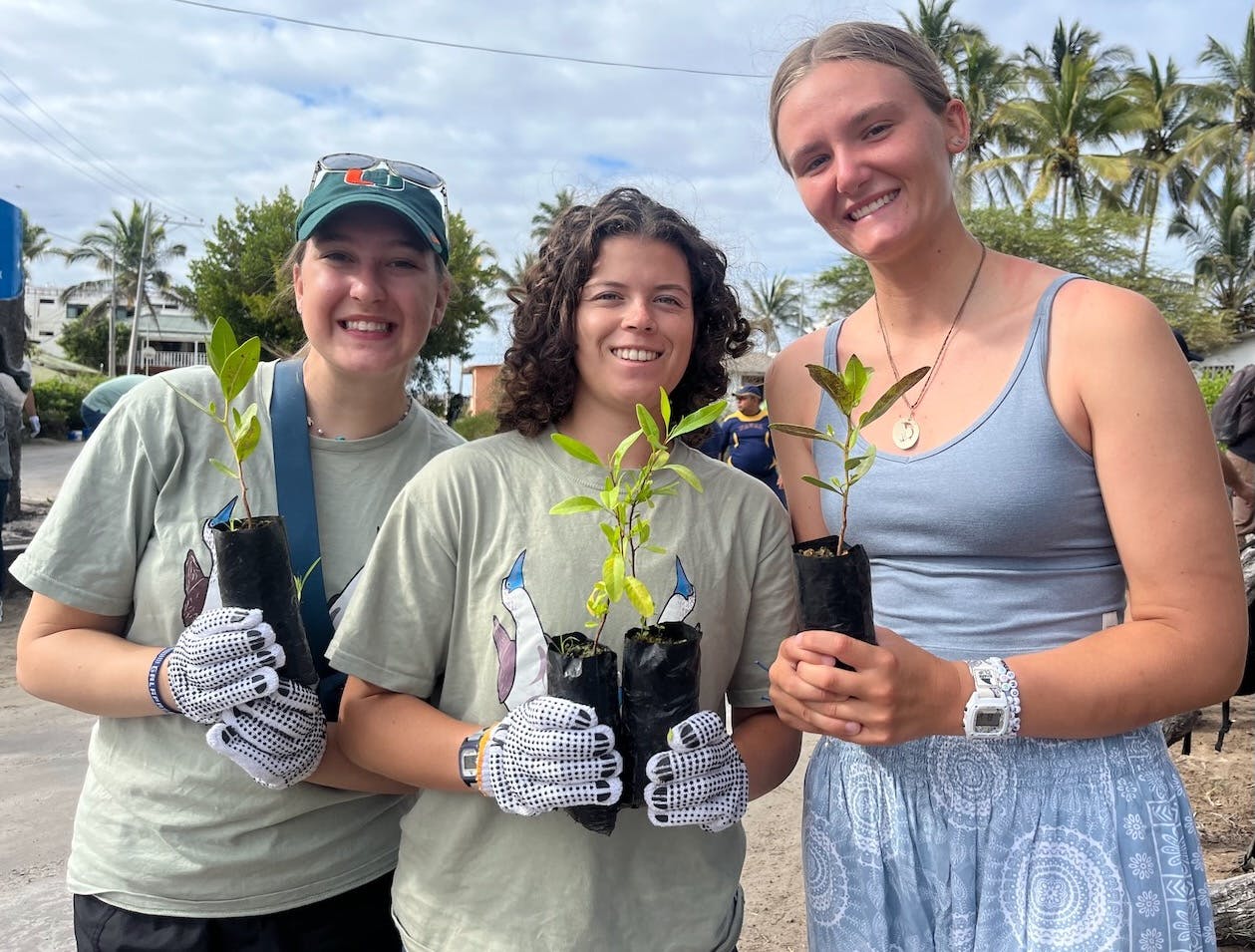
- Assisting within the Galapagos National Park Endemic Plant Species Nursery. E.g. supporting park rangers with tasks such as transplanting seedlings, pruning, preparing nursery beds, management of plant health and invasive species.
- Helping develop strategies for local food security and reduced import dependence.
- Contributing to community urban gardening projects. E.g. Sustainable vegetable gardens within schools, maintaining and creating local town gardens with endemic plant species.
- Contributing to climate adaptation and carbon mitigation projects such as reforestation or soil carbon tracking.
- Assisting with community outreach and environmental education on sustainable living and circular economy practices.
This internship is 100% carbon neutral. All program-related emissions are offset through local regenerative initiatives and carbon mitigation projects within the Galapagos, ensuring your contribution supports a truly sustainable impact.
Typical Schedule
-
Monday to Friday, up to 5 hours per day. Activities are held flexibly throughout the week, according to conservation priorities. Schedules for some tasks may be seasonal and subject to change.
What are the career benefits of interning abroad as a Sustainable Development & Regenerative Farming Intern?
Sustainable Development & Regenerative Farming interns learn from a qualified and experienced supervisor, and can be involved in:
-
Leadership and Off-Site Safety Management Training Courses.
-
Regenerative farming practices.
-
Strategies for local food security.
-
Reforestation and soil carbon tracking.
-
Hands-on conservation projects.
-
Community outreach and environmental education.
-
Cross-cultural communication and conservation education tasks.
Professional development opportunities:
-
Acquire hands-on experience in regenerative agriculture, NGO management, and cross-cultural sustainability communication.
-
Understand the interconnection between climate resilience, food systems, and community wellbeing.
-
Strengthen conservation leadership, fieldwork, and problem-solving skills within a real-world sustainability context.
-
Gain practical skills and boost your employability, with guidance from Intern Abroad HQ’s Experiential Learning Curriculum to support your learning and cultural intelligence.
Are you eligible for this internship?
Submit a free application so we can confirm your eligibility and check availability for your preferred dates.
Not sure which program to join?
Galapagos photo gallery


Academic credit available for all internships
Get course credit from your college or university while completing your internship abroad or a remote internship program. It's a great way to meet your academic requirements and gain valuable experience at the same time.
Learn about course creditProgram fees
Applying for our Sustainable Development & Regenerative Farming Internship is completely free! The support package covers the assistance we provide in finding your internship and arranging your living accommodations in your host country, ensuring you thrive during your program.
Please note that a deposit of US$499 is required to confirm your place. The remaining balance (minus your initial US$499 deposit) is due at least 60 days before your internship start date.
Duration |
Program Fee |
|---|---|
| 4 weeks | $4,299 Equivalent to $153 /day |
| 5 weeks | $4,699 Equivalent to $134 /day |
| 6 weeks | $5,099 Equivalent to $121 /day |
| 8 weeks | $6,049 Equivalent to $108 /day |
| 10 weeks | $6,899 Equivalent to $98 /day |
| 12 weeks | $7,699 Equivalent to $91 /day |
- Breakfast, lunch, and dinner
- Transient visa (for all interns aged 18+ - this visa is specific to Galapagos National Park only)
- Local pickup
- Return ferry from Santa Cruz to Isabela island
- Accommodation
- 24/7 in-country support
- Program orientation
- Dedicated support before, during, and after your internship
- In-country guidance for social and tourist activities
- Sourcing and securing your internship placement
- Personalization of your internship plan
- Coaching from your supervisor
- Documented portfolio of your experiential learnings
- Academic credit facilitation
- International reference letter
- Certificate of Internship Completion
- Transit Control Card
- Water taxis
- Transfer from the Baltra Airport to Puerto Ayora ferry terminal (transfer includes a bus, small ferry, and another bus or taxi)
- Return bus from ferry to the airport when your program finishes
- Visa (if required), flights, travel insurance (mandatory), vaccinations, criminal background check
- Personal spending money for snacks, drinks, public transport, laundry, and leisure activities during your free time.
Activities and tourism
Interns have free time on the weekend and there are plenty of activities on offer. Each excursion may cost approximately US$50, so it’s important to budget accordingly. The Sierra Negra Volcano hike and Los Tuneles snorkeling excursions cost closer to US$120. Interns are advised not to book any excursions until you’ve arrived and decided how you’d best like to arrange your free time.
Kayak the bay, rent a bike, and visit stunning coastal routes, passing lagoons, mangroves, and giant tortoises in the wild. If you love nature and the glorious outdoors, there is so much to see and do!
Arrival and Orientation
When are internships in the Galapagos available?
Internships in the Galapagos begin on the first Monday of each month. Interns may choose to spend a minimum of 4 weeks, up to a maximum of 12 weeks. Spaces are limited and advance reservation is strongly recommended.
Where are the Galapagos Islands internships based?
Both the Marine & Coastal Conservation Management and Sustainable Development & Regenerative Farming internships are based in Puerto Villamil, a small port village located on the southeastern edge of Isabela Island. This is where orientation and general administration is carried out. Various internship activities may take place within walking distance around Puerto Villamil. Depending on project needs, some activities may take place in the highlands, within an approximate 30-minute travel vicinity.
The typical port of entry for this program is the Seymour Galapagos Ecological Airport (GPS) on Baltra Island. From here, it is necessary to travel onward to Isabela Island, via ferry. (This ferry trip is included in your Program Fee). Alternatively, you may choose to take an island hopper plane from Baltra Island to Isabela Island with EMETEBE airlines (this flight is not included in your Program Fee).
When do you need to arrive and check-in?
Accommodation and arrival transportation assistance are included in the Program Fee. Interns are required to arrive on Isabela Island on your chosen Monday start date.
Most program participants arrive in mainland Ecuador on Sunday and spend this night in either Quito or Guayaquil (we suggest you choose a hotel with airport transfer service - there are many to choose from).
On Monday, they then travel onward to Baltra Island, before taking the ferry across to Isabela Island. Upon arrival at Isabela Island, you will be met by a local representative, who will greet you and provide transportation to the program accommodation.
All applicants are advised not to book flights or make travel arrangements until you’ve first registered to confirm participation. Comprehensive arrival and departure instructions will be provided to you in advance, providing further support with these logistics.
What does the internship internship orientation cover?
On Tuesday, following your arrival, the welcome orientation is hosted by the team in Galapagos. This orientation runs for half the day and covers everything you need to know for getting started with your internship. For example, introduction to Galapagos, customs, rules and expectations, safety, travel opportunities over the weekends, etc.
What are the internship end-date and departure logistics?
Your internship program will end on the Friday of your final week. Accommodation is provided on the Friday and Saturday night of your final week, leaving you free to depart on either the Saturday or Sunday morning of your final week.
Check what's required to visit Galapagos
Check out the widget below to learn about the visa requirements for the Sustainable Development & Regenerative Farming internship in Galapagos, based on your country of residence.
Accommodation and WiFi
What kind of accommodation is provided for interns?
Interns are accommodated in a homestay with a local family. Homestay accommodations provide international interns with an extra layer of support, while also providing a valuable opportunity for cultural immersion. Guests can expect to share a twin room with one other program participant or may have their own private room (subject to availability). Each bedroom has its own bathroom.
It is important to note that internet reception in homestays can be weak. There is WiFi in the local program office and it can also be accessed in a few restaurants and cafes around the town of Puerto Villamil. If you wish to have a SIM card for your stay, you’ll need to ensure that you purchase one on the mainland, prior to reaching the Galapagos (flights might arrive too late or leave too early to be able to purchase a SIM card in the airport). You can also talk to your phone service provider in advance about coverage in the Galapagos. Ensure that the Claro network is included.
Are private rooms and/or accommodation upgrades available?
For interns who prefer more privacy and independence, it is possible to arrange accommodation through a local hotel. This includes a private room and bathroom, with breakfast included (lunch and dinner would be accessed at the nearby restaurants). Our program staff can organize discounted rates in advance, but this is subject to availability. All requests for private accommodations need to be discussed and planned well in advance.


Meals
Are meals included?
Yes - internships in the Galapagos include three meals per day (breakfast, lunch, and dinner). Breakfast and dinner are provided at the homestay accommodation. Lunch is provided at local associated restaurants.
What kind of meals are provided?
For breakfast, meals may include fresh fruit, fried eggs, bread and cooked green plantains. Lunch is provided at local associated restaurants and interns will have a variety of menu items to choose from. Lunch and dinner meals typically will include protein (meat, fish), rice and some vegetables (variable, according to season). Meals often start with a light soup. Filtered water is available via the local program office and homestays.
Adaptability is encouraged, as the meals provided are unlikely to reflect what you’re used to eating at home. All interns are encouraged to budget extra spending money for snacks and treats, according to your usual eating habits. Restaurants, cafes, and small shops are all within walking distance.
A weekly budget of approximately US$200 is recommended in general, but this depends on individual spending habits and lifestyle choices - personal budgets can vary significantly (also taking optional excursions into account). Isabela Island is remote, so the cost of extra snacks and drinks are relatively more expensive than similarly priced islands in other Central American countries. Such “extras” can add up during the week.
Can various dietary requirements be catered for?
To an extent. You will be asked to advise of any special dietary requirements (intolerances and/or allergies) in advance. Many homestay families are accustomed to catering to international participants with dietary restrictions such as vegan, vegetarian, pescatarian, gluten-free, nut and lactose allergies. (Halal restrictions are more challenging to accommodate). You may need to supplement your meals, according to your own preferences or requirements. Please plan in advance for this and budget accordingly.
Essential country information
| Capital | Puerto Baquerizo Moreno on San Cristóbal |
| Population | 2,500 on Isabela Island and 33,042 across the Galapagos Islands |
| Languages | Spanish |
| Currency | US Dollar (USD) |
| Time zone | UTC-06:00 |
Weather and climate:
The Galapagos Islands have a subtropical climate. Throughout the year, the temperature mainly ranges between the mid 60s ºF and high 80s ºF (approximately between 18°C through 29°C). The cooler dry season runs from around July through December. The warmer humid season usually runs from December through till June. Water temperatures range during the different seasons.
Other internships you may be interested in
-
 Habitat Conservation Internships: Intern abroad in Belize
 -
 Environmental Conservation Internships: Intern abroad in San Ramon, Costa Rica
 -
 NGO Support for Marine Conservation Internships: Intern abroad in Manuel Antonio, Costa Rica
 -
 Terrestrial Environmental Research & Conservation Internships: Intern abroad in Samos, Greece
 -
 Microplastics & Climate Change Monitoring Internships: Intern abroad in Samos, Greece
 -
 Mediterranean Tortoise Conservation & Ecosystem Regeneration Internships: Intern abroad in Tetouan, Morocco
 -
 GIS & Reserve Management Internships: Intern abroad in Gondwana Game Reserve, South Africa
 -
 Reserve Management & Research Internships: Intern abroad in Kruger Park, South Africa
 -
 Wildlife, Ecology & Anthropological Research Internships: Intern abroad in Mogalakwena, South Africa
