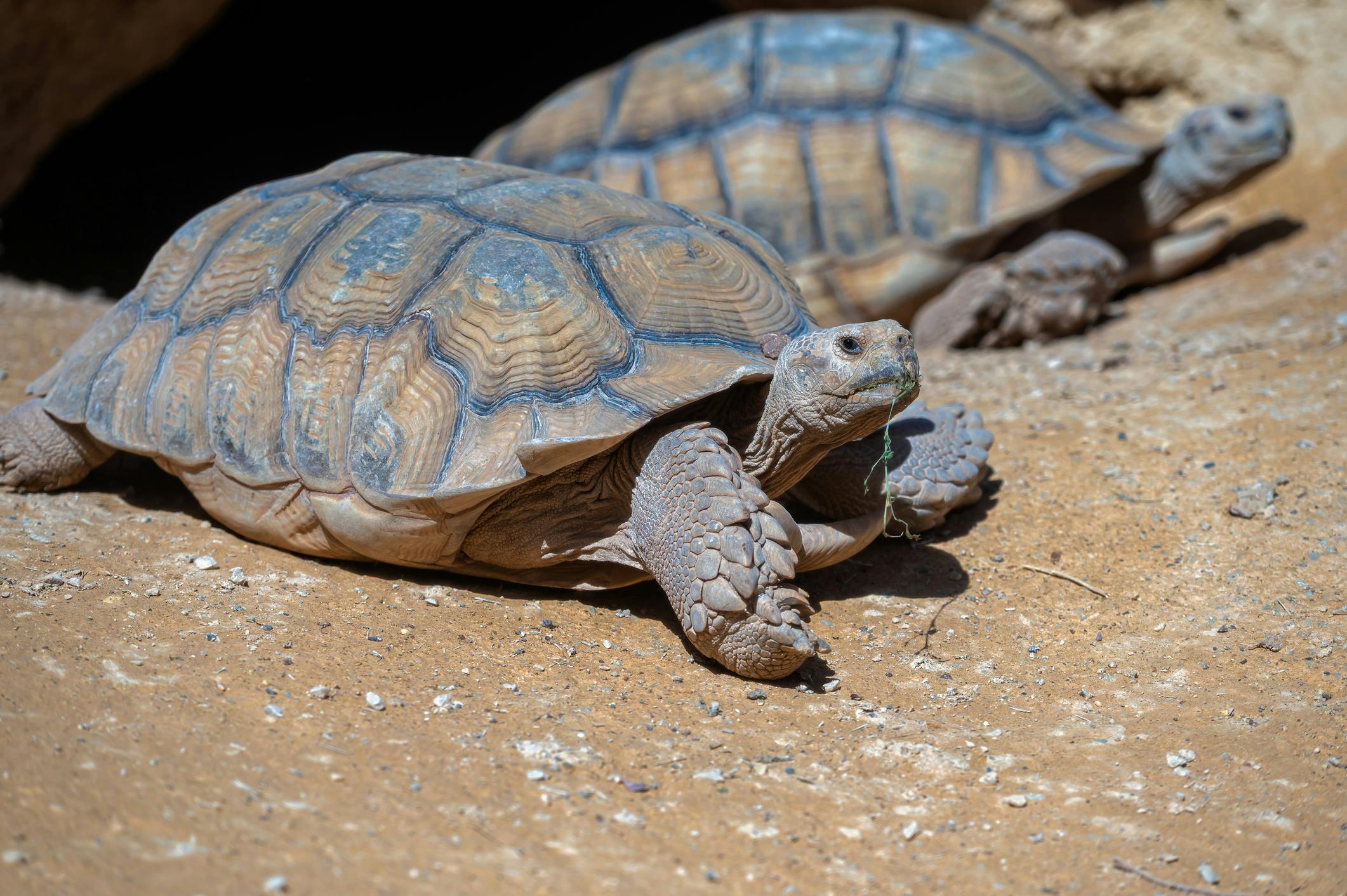
Mediterranean Tortoise Conservation & Ecosystem Regeneration Internships: Intern abroad in Tetouan, Morocco
Committed to environmental regeneration and ecological health, this pioneering program provides opportunities to become immersed in the protection of diverse ecosystems and habitats. Situated in northern Morocco, near to the Atlantic and Mediterranean coastlines (shared with both Spain and France), the internship’s focus areas include Mediterranean tortoise conservation, reforestation, wildlife monitoring, and environmental education.
What to expect from your Mediterranean Tortoise Conservation & Ecosystem Regeneration internship:
- Cultural immersion and hands-on conservation experience.
- Participation in nature trails and local activities.
- Environmental restoration workshops.
- Care of wildlife and reserve animals.
Your internship abroad host organization:
- Regenerative Environmental NGO Organization

Internship details
Regenerative conservation strives to balance the economic interests of communities with environmental integrity. In Morocco, this Mediterranean Tortoise Conservation & Ecosystem Regeneration program takes an innovative and holistic approach to conservation efforts.
This is an in-country internship, with accommodation and meals provided. Click here to view remote Environmental & Marine Sciences internships, which you can undertake from home.
Led by a professional Naturalist with more than 20 years of experience, come prepared to learn about the design and operation of environmental programs, ecological restoration, and grassroots conservation education efforts. With a strong belief that regeneration is the future of environmental management worldwide, the importance of environmental stewardship is a key theme within this internship experience.
The Mediterranean Tortoise Conservation & Ecosystem Regeneration internship takes place at the organization’s operational base, situated within a private reserve spanning 5 hectares in the Tetouan province. There are three nearby cities of interest, the closest being the Mediterranean port town of Tetouan. From Tetouan to either Tangier (the “gateway to Europe”) or Chefchaouen (the picturesque “Blue City”), the drive is approximately 90 minutes to either city.
Tortoises in this region face several threats, including:
- Habitat fragmentation caused by agriculture and livestock.
- Illegal collection for trade or as pets.
- Mortality related to infrastructure and human activity.
- Lack of natural shelter and food during dry seasons.
For this reason, tortoise conservation is not addressed in isolation, but as part of a broader ecosystem restoration project, which also includes work with other indicator species such as chameleons and birds, and the recovery of functional ecological corridors.
Year-round activities are also related to rehabilitation of rescued wildlife, plant nursery activities (e.g. propagation, maintenance etc), forest regeneration, environmental restoration workshops, and community cultural events for sustainability education. The goal of the program is not only to protect individual animals, but to:
- Contribute to the stability of local populations.
- Improve habitat quality and connectivity.
- Generate useful information for future conservation strategies.
- Raise awareness among volunteers and local communities about the importance of biodiversity.
This makes the experience educational, hands-on, and genuinely impactful, rather than symbolic or touristic.
Mediterranean Tortoise Conservation
The Tortoise Conservation component of the program focuses on the protection, recovery, and active management of local populations of the Mediterranean spur-thighed tortoise (Testudo graeca), a terrestrial species threatened by habitat loss, illegal collection, and increasingly extreme climatic conditions linked to climate change.
The main focus of the project is habitat regeneration and biodiversity restoration, including the integration of local human communities as part of the ecosystem. The region is affected by a combination of human pressure, ecosystem degradation, and the lack of long-term monitoring programs, making tortoises a key species for both direct conservation action and environmental education.
The high-activity turtle and tortoise season usually runs from March through October. During this time, interns have scope to attend to the reserves nursery for baby tortoises, and may also have opportunities to contribute to any sea turtle related tasks as well (subject to seasonality and availability).
Activities cover all reproductive and growth stages, including monitoring reproduction, preparing and protecting nests, caring for hatchlings in a nursery until they reach a safe size, and reintroducing them into their habitat. Interns also participate in monitoring adult populations, habitat restoration, creating micro-refuges, and establishing biodiversity corridors, providing a comprehensive learning experience in regenerative conservation.
The program follows an in situ conservation and active management approach, combining habitat restoration, population monitoring, and direct protection actions, including:
- Identification and monitoring of areas with breeding populations.
- Protection of nests and breeding zones when necessary.
- Rescue and recovery of vulnerable individuals, especially hatchlings.
- Maintenance of safe areas within the project for observation, recovery, and study.
- Collection of basic data to better understand population status and key threats.
The project also operates a tortoise nursery, where hatchlings can grow until they reach a size at which predation risk from introduced predators (mainly feral dogs and cats) is significantly reduced. After this stage, individuals are released back into the exact locations where they were found, reinforcing local populations.
Sea Turtle Conservation
In addition, the project carries out monitoring of loggerhead sea turtles on Mediterranean beaches, as climate change is shifting nesting patterns, with Morocco increasingly becoming a nesting area rather than only a feeding ground - a trend already observed in Spain, Italy, and France.
Although sea turtle nesting activity has not been confirmed in Morocco; there are indications; albeit no confirmed egg-laying. Therefore, sea turtle conservation activities may focus on night-time beach monitoring, observing possible tracks and recording activity.
Intervention is temporary and exploratory, aimed at collecting information to guide future conservation actions if nesting is confirmed.
At Lake Asmir, the presence of European pond turtles and Mediterranean pond turtles (likely introduced decades ago) is also being studied as part of the broader assessment of local aquatic biodiversity.
Example itineraries
All activities are adapted to the experience level of participants and are always conducted under supervision.
Morning
- Shared breakfast at the visitor house (interns may help with preparation and basic communal tasks).
- Short daily briefing: review of objectives, weather conditions, and assigned tasks.
- Animal care and feeding at the conservation center.
- Field walks for: Track monitoring. Locating tortoises. Checking microhabitats and movement corridors.
Midday
- Return to the center.
- Data entry and group discussion of observations.
- Cleaning and preparation of equipment for the following day.
- Lunch.
Afternoon
- Free time.
- Occasional light tasks such as checking and refilling external water points.
- Dinner and rest.
Example of an intern’s typical week (indicative)
Weekly planning changes according to ecological priorities, but a typical week may include:
- Day 1: Field monitoring and general maintenance of the center.
- Day 2: Construction and improvement of tortoise nurseries and center facilities.
- Day 3: Installation of signage and maintenance of biodiversity corridors.
- Day 4: Workshop activities e.g. Building shade shelters for tortoises. Preparing nest boxes and protective structures.
- Day 5: Tasks at the project nursery and reforestation activities.
Some weeks may also include:
- Educational visits to nearby schools.
- Environmental education activities with local communities.
- Preparation of areas for tortoise reintroduction.
Field monitoring is a core activity of the program and conducted primarily during the day - not only at the main program site, but may also take place in other valleys where populations of interest are found. During monitoring, interns may
- Search for tracks, nests, and reproductive or subadult individuals.
- Photograph and weigh the individuals encountered.
- Assess health status, removing external parasites when necessary.
- Accurately record the exact location of each observation.
Routes are always conducted along the same trails, approximately every two weeks, allowing consistent population monitoring.
Internship Supervision and Program Team
Interns will receive direct and continuous supervision throughout their stay, in collaboration with a communications specialist, experienced with Erasmus programs in European universities. The team includes local assistants, experienced in wildlife handling and supporting field and center-based activities. When the Lead Biologist is unavailable, supervision will be carried out by the Program Director, who brings extensive experience in tortoise conservation, management of regenerative reserves, and coordination of field-based educational and research projects.
Internship activities are organized through daily briefings, practical training, and direct supervision. At certain times, tasks may be assigned in groups or individually, but always under close coordination and communication to ensure safety, learning, and effectiveness. This approach prioritizes safe and effective learning, understanding the purpose of each action within the project’s broader conservation and regenerative strategy.
Typical Schedule
-
Activities vary depending on the season and the biological stage of the tortoises (breeding, hatching, growth, or reintroduction), so activities are adapted according to conservation needs. Expect to participate Monday through Friday, approximately 5 hours per day, combining fieldwork, hands-on activities at the conservation center, and practical learning.
What are the career benefits of interning abroad as a Mediterranean Tortoise Conservation & Ecosystem Regeneration Intern?
Mediterranean Tortoise Conservation & Ecosystem Regeneration interns learn from a qualified and experienced supervisor, and can be involved in:
-
Field surveys, identification, and recording of tortoises.
-
Microhabitat restoration and improvement of natural shelters.
-
Supporting the creation and maintenance of protected zones and biodiversity corridors.
-
Behavioral observation and basic data collection.
-
Daily management of the hatchling nursery (maintenance, monitoring, and preparation for release).
-
Participation in environmental education activities with local communities and visitors, when appropriate.
Professional development opportunities:
-
Develop responsible wildlife field monitoring techniques.
-
Gain experience with basic handling and care of terrestrial reptiles.
-
Learn about habitat restoration and creation of micro-refuges.
-
Assist with the design and construction of simple conservation infrastructure.
-
Learn basic ecological data collection and analysis.
-
Gain teamwork experience in real conservation settings.
-
Understand regenerative conservation approaches, integrating biodiversity and human communities.
-
Gain practical skills and boost your employability, with guidance from Intern Abroad HQ’s Experiential Learning Curriculum to support your learning and cultural intelligence.
Are you eligible for this internship?
Submit a free application so we can confirm your eligibility and check availability for your preferred dates.
Not sure which program to join?
Morocco photo gallery


Academic credit available for all internships
Get course credit from your college or university while completing your internship abroad or a remote internship program. It's a great way to meet your academic requirements and gain valuable experience at the same time.
Learn about course creditProgram fees
Applying for our Mediterranean Tortoise Conservation & Ecosystem Regeneration Internship is completely free! The support package covers the assistance we provide in finding your internship and arranging your living accommodations in your host country, ensuring you thrive during your program.
Please note that a deposit of US$499 is required to confirm your place. The remaining balance (minus your initial US$499 deposit) is due at least 60 days before your internship start date.
Duration |
Program Fee |
|---|---|
| 2 weeks | $1,687 Equivalent to $120 /day |
| 3 weeks | $2,131 Equivalent to $101 /day |
| 4 weeks | $2,575 Equivalent to $91 /day |
| 5 weeks | $3,019 Equivalent to $86 /day |
| 6 weeks | $3,463 Equivalent to $82 /day |
| 8 weeks | $4,351 Equivalent to $77 /day |
| 10 weeks | $5,289 Equivalent to $75 /day |
| 12 weeks | $6,177 Equivalent to $73 /day |
- Airport pick-up
- Meals
- Accommodation
- 24/7 in-country support
- Program orientation
- Dedicated support before, during, and after your internship
- In-country guidance for social and tourist activities
- Sourcing and securing your internship placement
- Personalization of your internship plan
- Coaching from your supervisor
- Documented portfolio of your experiential learnings
- Academic credit facilitation
- International reference letter
- Certificate of Internship Completion
- All in-country transportation
- Transfer back to the airport at the end of your internship program
- Visa (if required), flights, travel insurance (mandatory), vaccinations, criminal background check
- Personal spending money for snacks, drinks, public transport, laundry, and leisure activities during your free time.
Popular add-ons & experiences in Morocco
Take your internship to the next level with Intern Abroad HQ's affordable activity and tour add-ons in Morocco! Explore your options below and learn how to book them once you've been accepted onto an internship program.

Step into an unreal Moroccan group tour that takes you from the towering Atlas Mountains to the endless Sahara. Wind through hidden gem medinas, dive into bustling souks, and share sunset mint tea with your new travel family.
Weekends and travel
Free time is available to interns each week, from Friday afternoon, through Saturday and Sunday. Optional cultural and touristic activities with trusted local guides are available and can be coordinated for an additional cost. Otherwise, free time can be spent independently, to relax and explore local attractions.
The Mediterranean port town of Tetouan is closest to the internship base. Here, you can enjoy Tetouan’s old city, a UNESCO World Heritage site, recognized for its beautiful art, urban layout, and architecture.
From Tetouan, the cities of Tangier and Chefchaouen are both about 90 minutes drive away. Tangier has a vibrant old town, where you can explore surrounding beaches, markets, traditional architecture, historic landmarks, gardens, colorful art galleries, and more. The seaside town of Asilah, near to Tangier, is dominated by tourism, and hosts the annual International Cultural Festival. Chefchaouen, nicknamed the “Blue City”, is the famous blue-washed town. There are many handicraft artisans in the area for shopping and souvenirs.
Arrival and Orientation
When are the internships available?
Mediterranean Tortoise Conservation & Ecosystem Regeneration internships in Morocco begin each Monday of the month. Exceptions may be made to this when start dates are shifted to avoid public holiday disruptions or closed when the program has already reached capacity.
Interns may choose to spend a minimum of 2 weeks, up to a maximum of 12 weeks. Spaces are limited and advance reservation is strongly recommended.
When do you need to arrive and check-in?
Airport pick up and accommodation are included in the Program Fee. Interns are asked to arrive on their chosen Monday start date The accommodation is covered from the first Monday night of the program.
The typical port of entry for this program is the Tangier-Ibn Battouta Intl. Airport (TNG). Upon arrival, interns will be met, greeted, and transferred to the accommodation. The transportation time from airport to reserve is approximately 90 minutes.
If you are planning to spend time independently in Morocco prior to your internship and will not require an airport pick up, we can discuss alternative arrival logistics with you. Pick up can also be arranged from the port (if arriving from Spain) and the Ceuta land border.
The last night of the accommodation is the Friday night of the final week, leaving interns free to depart on Saturday.
Extra nights of accommodation can be arranged in advance, if requested, and are subject to availability.
Please note that all participants are advised not to book flights until they have first registered to confirm their internship placement.
What does the internship orientation cover?
Orientation covers important details for your internship, including introductions, internship guidance, local culture, transportation, city logistics, rules, emergency contacts, expectations, safety, free time activities, and more.
Check what's required to visit Morocco
Check out the widget below to learn about the visa requirements for the Mediterranean Tortoise Conservation & Ecosystem Regeneration internship in Morocco, based on your country of residence.
Accommodation and WiFi
Where is the intern accommodation located?
Interns are accommodated onsite at the nature reserve, where the internships take place. The camp is located in a valley in the Yebala region, in the province of Tetouan, along the Asmir River and its formed lake, surrounded by green hills and traditional fields.
Its proximity to the village of El Kuf allows participants to experience authentic Moroccan culture, with traditional architecture, rural streets, whitewashed houses, and patios full of greenery. The vibrant environment - with mosaics, warm colors, and artisanal details - blends harmoniously with the natural landscape, creating a captivating and serene environment.
The location combines nature, culture, and tranquility, providing a perfect setting for tortoise conservation activities, along with ecosystem study and community engagement. Come prepared to become immersed in the beauty and rich culture of Morocco!
What kind of accommodation is provided for interns?
Accommodation is provided within a traditional Rif-style house. Such traditional accommodation is relatively minimalist; there is no air-conditioning or fans, as the innovative architecture is designed to suit the climate. Thick walls regulate the temperature, ensuring that the accommodation remains cool and naturally ventilated during the summer, but warm during winter months.
Living is safe, clean and comfortable. Separate dormitory rooms are provided for males and females. The rooms are spacious and there is a maximum capacity of 6 guests per room. Rooms are equipped with small tables and chairs. Beds are traditional Moroccan style, decorated with typical Moroccan textiles, including colorful blankets and geometric-patterned cushions. Bedding includes sheets, blankets, and pillows. Those who prefer can bring a sleeping bag. The house bathrooms are equipped with shampoo, shower gel, and toothpaste.
The house includes shared common areas such as dining space, meeting room, workshop area, and bathrooms. The house is fully secured when empty, and personal belongings remain safely inside.
Electricity is provided by solar panels, so efficient energy use is required. High-consumption appliances such as hair dryers or toasters cannot be used; the green energy is reserved for charging mobile devices, cameras, and laptops.
Internet access and mobile coverage in this rural area is limited, with some days of very weak signal. The house does not have Wi-Fi, but local phone data is shared for basic communication needs.
Are private rooms and/or accommodation upgrades available?
The program fee covers standard accommodation at the base, consisting of shared, simple rooms designed to provide basic comfort during the stay. Private room options are available for an additional fee. These are subject to availability and must be arranged in advance.
Meals
Are meals included?
Yes - this program includes three meals per day, prepared by a Cook or Program Manager, and served at the program accommodation. The team invites interns to take part in the daily life of the reserve, including food preparation and cleaning. However, such participation is not mandatory: interns may rest during this time if they wish, or actively participate if they prefer.
What kind of meals are provided?
Meals are traditional Moroccan dishes, prepared with natural, local, and seasonal ingredients. No processed foods are used. This is a key principle of the program. Examples of breakfast dishes include fresh bread, artisanal butter, olive oil, honey, traditional cheese (jben), tea and coffee. Examples of traditional lunch dishes include vegetable and chicken couscous (on Fridays, according to tradition), kefta tajine (minced meat), traditional soups such as bisara (fava beans) or harira (lentils). Dinner meals are usually lighter, for example, tuna salad with vegetables, vegetable soups, seasonal fruit. The accommodation also supplies purified drinking water.
Adaptability is encouraged, as the meals provided are unlikely to reflect what you’re used to eating at home. All interns are encouraged to budget extra spending money for snacks and treats, according to your usual eating habits. Morocco is a relatively affordable country when consuming local products and around US$50 per week is considered to be more than sufficient for covering extra snacks, treats, and any meal supplementations. If you wish to purchase imported or more “gourmet” products (including pork), the budget may increase to around US$80 per week.
There are no supermarkets or cafes within walking distance of the reserve. However, program staff travel daily between the village and the reserve and approximately every two days - interns are invited to join a trip to the village (about 8 km away), where purchases can be made independently.
Alcohol consumption is strictly prohibited within the facilities and during the internship period.
Can various dietary requirements be catered for?
To an extent. You will be asked to advise of any special dietary requirements (intolerances and/or allergies) in advance. Please be prepared to discuss this with the team in-country as well. Omnivorous and vegetarian diets can be accommodated. However, vegan, raw vegan, carnivore, keto, or other specific diets, cannot be provided; in such cases, you will need to supplement your meals, according to your own needs and preferences. Please plan in advance for this and budget accordingly.
Essential country information
| Capital | Rabat |
| Population | 36.91 million |
| Languages | Arabic and Berber |
| Currency | Moroccan Dirham (MAD) |
| Time zone | UTC±00:00 |
Weather and climate:
Tetouan has a Mediterranean climate, with mild winters and warm, dry summers. The local climate is influenced by the nearby coast, as well as the Rif Mountains. As a result, both spring and autumn months are typically pleasant, and the summer temperatures are not as hot as the regions in inland Morocco.
Other internships you may be interested in
-
 Habitat Conservation Internships: Intern abroad in Belize
 -
 Environmental Conservation Internships: Intern abroad in San Ramon, Costa Rica
 -
 NGO Support for Marine Conservation Internships: Intern abroad in Manuel Antonio, Costa Rica
 -
 Sustainable Development & Regenerative Farming Internships: Intern abroad in the Galapagos
 -
 Terrestrial Environmental Research & Conservation Internships: Intern abroad in Samos, Greece
 -
 Microplastics & Climate Change Monitoring Internships: Intern abroad in Samos, Greece
 -
 GIS & Reserve Management Internships: Intern abroad in Gondwana Game Reserve, South Africa
 -
 Reserve Management & Research Internships: Intern abroad in Kruger Park, South Africa
 -
 Wildlife, Ecology & Anthropological Research Internships: Intern abroad in Mogalakwena, South Africa
