Forensics - Wildlife & Conservation: Intern abroad in Cape Town, South Africa
Wildlife crime has reached unprecedented levels, negatively affecting ecosystems and economies around the world. Forensic science plays a crucial role in tackling this issue, across various industries. Wildlife Forensics & Conservation internships in South Africa provide comprehensive, hands-on learning experiences. Hosted by a leading training facility, interns are supposed to receive an introduction to wildlife crime investigations, legislation, and current conservation challenges.
What to expect from your Forensics: Wildlife & Conservation internship:
- Develop in-depth knowledge in wildlife crime and illegal wildlife trades.
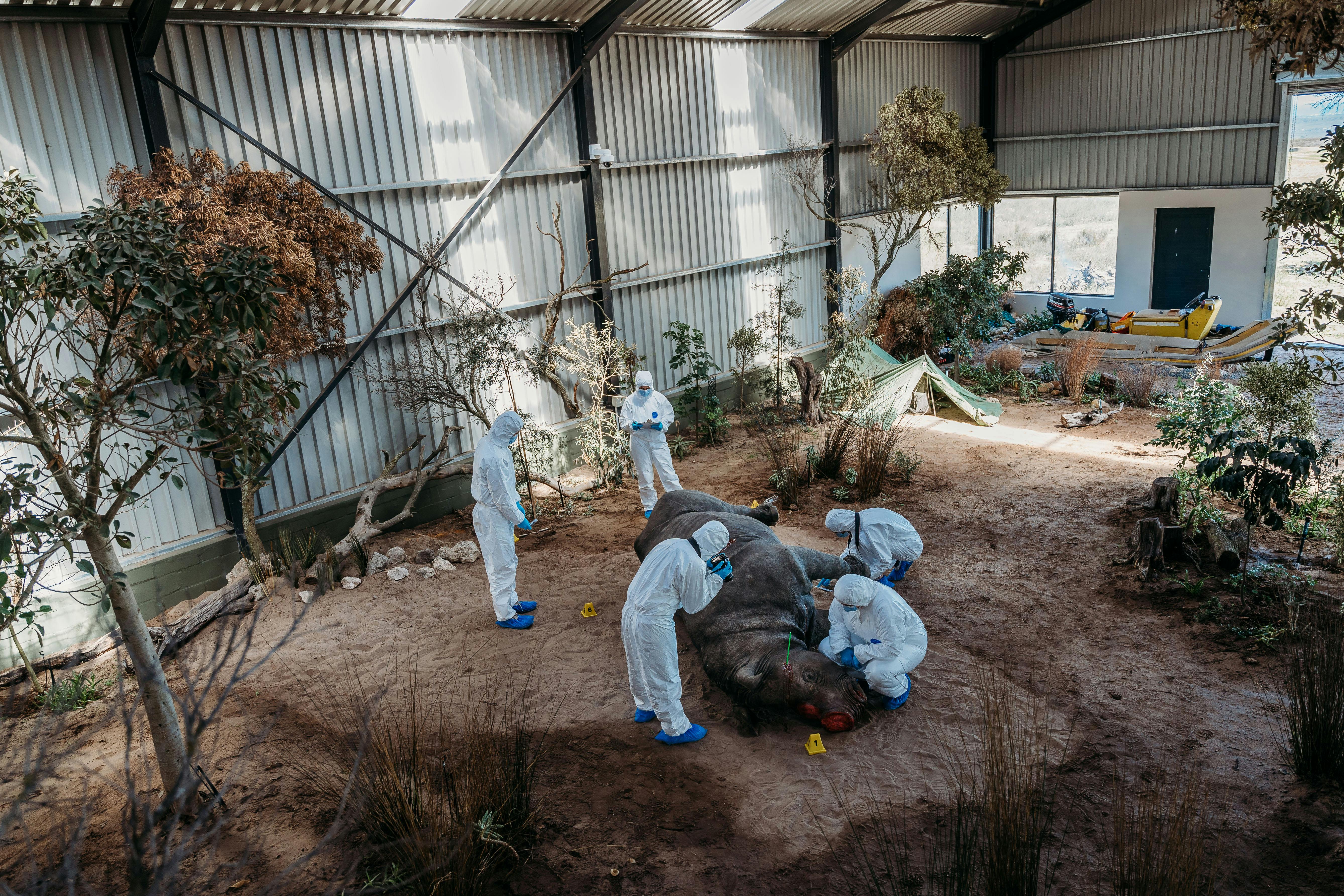
- Learn from mock wildlife crime scenes, designed to mirror real-world conditions.
- Gain insights into the core principles of forensic science.
- Conservation hands-on learning experience with guided educational excursion activities.
Your internship abroad host organization:
- Specialist Wildlife Forensics, Crime Scene Management, Illegal Wildlife Trade and Conservation course facilitators (Bufflesfontein Game and Nature Reserve)

Internship details
As part of this internship program, it is mandatory that a student select a course to complete. Approved by the Chartered Society of Forensic Sciences, the Wildlife Forensics, Crime Scene Management & Conservation courses are delivered over your choice of a two-week or four-week period. The itinerary for this program includes a variety of lectures, demonstrations, hands-on practical activities, and educational excursions. The comprehensive approach provides rich insight into African wildlife, modern conservation challenges, and dynamic cultural contexts.
Hosted via an established academy, dedicated exclusively to wildlife forensic science, interns are introduced to diverse examples of wildlife crime cases and the investigative methods required to address them. Mock crime scenes, provided through a leading facility for professional development, are designed to mirror real-world conditions. Interns are guided within this supportive and controlled learning environment, covering workshop scenarios from “crime scene to court-room”, learning to explore the broader global crisis related to illegal wildlife trade, poaching, trafficking, and biodiversity loss.
Come prepared to learn the core principles of forensic science, including evidence integrity, recovery, analysis, and crime scene documentation. Interns are also introduced to related disciplines, such as forensic veterinary pathology and management of injured animals. This kind of training experience is often provided for wildlife rangers, park managers, veterinarians, police officers, customs officers, forensic scientists and prosecutors, equipping them with the necessary skills to effectively combat wildlife crime and ensure the preservation of biodiversity.
In addition to theoretical and practical training, the internship itinerary includes educational visits and cultural activities, providing broader insights into the region and its wildlife protection initiatives.
Due to the immersive and structured nature of this program, start dates are limited and advance reservations are strongly encouraged. Start dates for 2026 are:
- Sunday, April 12th - 1 week duration only
- Sunday, June 14th - 2 week duration only
- Sunday, June 27th - choose from a 2 week or 4 week duration
- Monday, July 20th - 2 week duration only
- Sunday, August 30th - 2 week duration only
- Sunday, September 13th - 2 week duration only
Topic Overview:
- Introduction to Wildlife Crime, Poaching and Illegal Trade
- Marine Wildlife Poaching
- Preservation of a Crime Scene
- Role of Forensics
- Forensic Traces (Detection and Collection)
- Crime Scene Management
- Forensic Photography
- Wildlife Anatomy: Handling and First Aid
- Forensic Veterinary Pathology (subject to availability: post-mortem exam on a wild animal)
- Human-Wildlife Conflict
- Hands-on Experience Laboratory Training (Human Behaviour at the Crime Scene and Courtroom Training)
- Anti-poaching and Bush Skills
- Injured and Poisoned Animal Management
- Health: Wildlife and Human: Risks and Prevention
- South African Fauna and Flora
- Wildlife tracking and basic survival skills
Topic Overview: Extended 4-week program example (activities subject to change). Available from the June 27th start date only
- Human-wildlife conflict in other regions
- Practical Conservation Management and Conservation Principles
- Anti-Poaching Activities and Experiences
- Veterinary Role in African conservation
- Species Specific Management
- Re-Introductions and Sustainable Utilization
- Wildlife and ecological monitoring and management
- Wildlife Capture and Immobilisation Practicals (if available)
- Handling and Containment of Animals/Animal rehabilitation
- Protected Area Systems and Economics
- Socio-Economic Issues to Consider in African Conservation
- Comparing Conservation Models
- Pathology and Stress Related Mortalities
Typical Schedule
-
Typical course days run from 8:00 or 9:00 AM until 4:00 or 5:00 PM, with breaks. Evenings are usually spent socializing and enjoying dinner together. The course schedule is two weeks only (an extended 4-week program is available from the June 27th start date only).
What are the career benefits of interning abroad as a Forensics: Wildlife & Conservation Intern?
Forensics: Wildlife & Conservation interns learn from a qualified and experienced supervisor, and can be involved in:
-
Learn correct techniques and skills to investigate a wildlife crime scene as applied to a mock case.
-
Understand forensic science techniques used to analyse commonly encountered evidence.
-
Explore diverse ecology and organizations to understand South Africa’s important conservation landscape.
Professional development opportunities:
-
Gain in-depth knowledge in wildlife crime and the illegal wildlife trade.
-
Understand how forensic science can contribute to conservation efforts.
-
Develop understanding of forensic investigations and skills required for trace collection, documentation and presentation of courtroom evidence.
-
Gain practical skills and boost your employability, with guidance from Intern Abroad HQ’s Experiential Learning Curriculum to support your learning and cultural intelligence
Are you eligible for this internship?
Submit a free application so we can confirm your eligibility and check availability for your preferred dates.
Not sure which program to join?
South Africa photo gallery


Academic credit available for all internships
Get course credit from your college or university while completing your internship abroad or a remote internship program. It's a great way to meet your academic requirements and gain valuable experience at the same time.
Learn about course creditProgram fees
Applying for our Forensics: Wildlife & Conservation Internship is completely free! The support package covers the assistance we provide in finding your internship and arranging your living accommodations in your host country, ensuring you thrive during your program.
Please note that a deposit of US$499 is required to confirm your place. The remaining balance (minus your initial US$499 deposit) is due at least 60 days before your internship start date.
Duration |
Program Fee |
|---|---|
| 2 weeks | $3,971 Equivalent to $283 /day |
| 4 weeks | $7,034 Equivalent to $251 /day |
- Airport pick-up
- Airport drop-off
- Meals
- Lectures, demonstrations, hands-on practical activities
- Educational excursions and cultural visits
- Accommodation
- 24/7 in-country support
- Program orientation
- Dedicated support before, during, and after your internship
- In-country guidance for social and tourist activities
- Sourcing and securing your internship placement
- Personalization of your internship plan
- Coaching from your supervisor
- Documented portfolio of your experiential learnings
- Academic credit facilitation
- International reference letter
- Certificate of Internship Completion
- Visa (if required), flights, travel insurance (mandatory), vaccinations, criminal background check
- Personal spending money for snacks, drinks, public transport, laundry, and leisure activities during your free time.
Arrival and Orientation
When are the Wildlife Forensics & Conservation internships available?
Due to the immersive and structured nature of this program, start dates are limited and advance reservations are strongly encouraged. Start dates for 2026 are:
- Sunday, April 12th - 2 week duration only
- Sunday, May 24th - 2 week duration only
- Sunday, June 14th - 2 week duration only
- Sunday, June 27th - choose from a 2 week or 4 week duration
- Monday, July 20th - 2 week duration only
- Sunday, August 30th - 2 week duration only
- Sunday, September 13th - 2 week duration only
When do you need to arrive?
Airport pick up and accommodation are included in the Program Fee. Airport pick up is provided from the Cape Town International Airport (CPT) only.
The accommodation is covered from your Sunday start date. Interns are required to arrive no later than the Sunday start date and asked not to book flights until you have first reserved, to confirm your participation.
If you arrive in Cape Town prior to Sunday, you will need to make independent arrangements for any extra nights of accommodation. Requests for transportation from alternative pick-up sites (other than the Cape Town International Airport) may incur additional costs.
Starting activities for the program will usually take place at the Bufflesfontein Game & Nature Reserve (just an hour outside of Cape Town). On occasion, interns may commence starting group excursions in Cape Town, before receiving the onward transportation to the Bufflesfontein Game & Nature Reserve.
When does the program end?
The last night of the accommodation is the Friday night of your final week, leaving interns free to depart on Saturday. Departing interns are provided return transportation to either the Cape Town International Airport (CPT) or independent accommodation in Cape Town. The return transportation is provided on the program end-date only. Requests for return transportation on any alternative date will incur additional cost.
What does the orientation cover?
Orientation covers important details for your internship, including introductions, internship guidance, local culture, transportation, city logistics, rules, emergency contacts, expectations, safety, free time activities, and more.
Check what's required to visit South Africa
Check out the widget below to learn about the visa requirements for the Forensics: Wildlife & Conservation internship in South Africa, based on your country of residence.
Accommodation and WiFi
What kind of accommodation is provided for interns?
Accommodation includes a mix of on-site options, at the Bufflesfontein Game & Nature Reserve (guesthouse and chalets), as well as guesthouses in Cape Town and the Eastern Cape. The program includes some excursions, so assigned accommodation will vary during the itinerary.
Starting activities usually take place at the Bufflesfontein Game & Nature Reserve (just an hour outside of Cape Town). On occasion, interns may commence the starting group excursions in Cape Town, before receiving the onward transportation to the Reserve.
The Bufflesfontein Game & Nature Reserve is fully gated and secured at the entrance. The accommodation is situated approximately 10 meters from the academy site, where the program activities and workshops take place.
Camping activities can be scheduled for up to two nights (all tents, beds, bedding and pillows will be provided). The campsite has ample shade and a swimming pool with an ablution facility, including private showers, toilets and warm water. Only herbivorous animals roam around the reserve.
Accommodation rooms are comfortable and fully furnished. Wi-Fi is generally available, except when travelling between locations. Wi-Fi connectivity is strong within the Academy, moderate in the guesthouse and cottages, and unavailable in the chalets.
Is the accommodation shared?
Yes, it is intended to be shared accommodation. Guests are allocated to a same-gender, twin-share room (two people per room). Each twin-share room has access to its own ensuite bathroom. If you are interning alongside a friend, please let us know in advance, and we can aim to ensure you’re accommodated together. If requested, private rooms can be arranged, at an additional cost (subject to availability).


Meals
Are meals included?
Yes - this program includes three meals per day, commencing from lunch on the first day (Sunday) till lunch on the final day (Saturday).
You will be asked to advise of any special dietary requirements (intolerances and/or allergies) in advance. Please be prepared to discuss this with the team in-country as well.
Adaptability is encouraged, as the meals might be different from what you’re used to eating at home. All interns are encouraged to budget extra spending money for snacks and treats, according to your usual eating habits. As little as US$20 per week may suffice. There is a bar on the reserve that has a few snack and drink options. The accommodations include a kitchen and refrigerator which are suitable for guest access.
Essential country information
| Capital | Pretoria (Executive), Bloemfontein (Judicial), Cape Town (Legislative) |
| Population | 55.91 million |
| Languages | Afrikaans, English, Zulu, Xhosa, Swati, Tswana |
| Currency | South African Rand (ZAR) |
| Time zone | UTC+02:00 |
Weather and climate:
South Africa is generally temperate. The warm season usually ranges from December through March and the coldest months are June through September. Over the course of the year, the temperature in and around Cape Town typically varies from 48°F (9°C) to 76°F (24°C).
Other internships you may be interested in
-
 Law & Governance Internships: Intern abroad in Cordoba, Argentina
 -
 NGO Support Internships: Intern abroad in Cordoba, Argentina
 -
 NGO Support Internships: Intern abroad in Belize
 -
 Environmental Policy Internships: Intern abroad in Samos, Greece
 -
 Charity & NGO Support Internships: Intern abroad in Dublin, Ireland
 -
 Legal Practice Internships: Intern abroad in Rome, Italy
 -
 NGO Support Internships: Intern abroad in Rome, Italy
 -
 Human Rights & NGO Support Internships: Intern abroad in Amman, Jordan
 -
 Human Rights & NGO Support Internships: Intern abroad in Morocco
 -
 Women’s Rights & Education Internships: Intern abroad in Morocco
 -
 Legal Practice Internships: Intern abroad in Kathmandu, Nepal
 -
 Human Rights & NGO Support Internships: Intern abroad in Cape Town, South Africa
 -
 Legal Practice Internships: Intern abroad in Cape Town, South Africa
 -
 Charity & NGO Support Internships: Intern abroad in Seoul, South Korea
 -
 Legal Internships: Intern abroad in Barcelona, Spain
 -
 Legal Internships: Intern abroad in Madrid, Spain
 -
 Legal Internships: Intern abroad in Valencia, Spain
 -
 NGO Internships: Intern abroad in Spain, Barcelona
 -
 NGO Internships: Intern abroad in Spain, Madrid
 -
 NGO Internships: Intern abroad in Spain, Seville
 -
 NGO Internships: Intern abroad in Spain, Valencia
 -
 Legal Advocacy Internships: Intern abroad in Arusha, Tanzania
 -
 Legal Practice Internships: Intern abroad in New York, USA
